
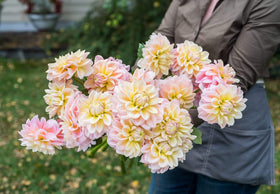


Many people focus intensely on peonies while they are flowering.
They carefully stake them. Photograph them endlessly. Cut armfuls for the house. During those brief weeks in spring, the flowers become the emotional center of the garden—lavish, theatrical, almost impossible to ignore.
And then the petals fall.
What is remarkable is how quickly attention disappears after that. Once the blooms are gone, many gardeners mentally move on. The peonies become background again—something green and increasingly untidy at the edge of summer.
But for the plant itself, the most consequential part of the year is only beginning. This is one of the least understood things about peonies, and one of the most useful.
After bloom, peonies enter a period that determines much of the following spring’s performance. Those large leaves are not decorative leftovers. They are rebuilding the plant’s reserves underground—storing the energy required to produce next year’s flowers. And peonies are expensive plants, energetically speaking.
Few perennials produce blooms of such scale and substance so early in the season. Those enormous flowers are not created impulsively. They are funded slowly, over time, through what happens after flowering has already ended.
Which is why one of the most common mistakes gardeners make is “tidying” peonies too early. By July, the foliage often looks less glamorous than the flowers did in May. The plant sprawls a bit. Leaves develop spots from rain or humidity. Compared to the lush perfection of bloom season, the whole thing can begin to feel faintly disappointing. So gardeners cut the foliage down early, assuming the plant is essentially finished for the year.
But interrupting a peony in midsummer is a bit like interrupting someone halfway through packing for a long journey. The consequences rarely appear immediately, which is part of why the connection is so often missed.
Instead, the effects arrive the following spring:
- fewer flowers
- smaller blooms
- weaker stems
- or a plant that seems to decline for no obvious reason despite surviving winter perfectly well.
What failed was not the bloom. What failed was the replenishment.
Home gardeners often assume that because peonies are generous bloomers, they can cut nearly every flower for arrangements. But experienced growers know to leave far more foliage behind than people expect. If too many stems are removed, the plant loses much of its ability to recharge itself during summer.
The irony is that the very beauty people love most about peonies can weaken future beauty if taken too aggressively.
And perhaps this is part of why mature peonies feel so emotionally resonant in old gardens. They are not impulsive flowers. They are cumulative ones.
A peony in full splendor is not merely the result of spring warmth. It is the result of what the plant was allowed to keep the previous summer—the quiet months after everyone stopped paying attention, when the real work was still underway beneath the leaves.
Such a great piece – thank you so much for sharing this. Your well-seasoned perspective on growing is always so thorough and thoughtful and is so appreciated by me. Thank you again!
A bonus for leaving the leaves alone is that they are gorgeous in the fall, with lots of color and character, and you can harvest them then for fall flower arrangements!
Thank you. I am new to peonies. I have two and had no idea what to do with them.
I had no idea that the plant should not be cut down. Now I will not be cutting mine down so quickly!
Loved ready this about peonies! I seldom cut mine as I just enjoy seeing them on the plants…which, I gather helps me have more blooms in succeeding years.